Schedule your initial consultation today and start your journey towards a pain-free, healthier smile. Contact us now!
Are you missing one or more teeth? Dental implants can be just the thing you need to restore the feel, function, and appearance of your natural teeth. No bulky bridges, partials, or acrylic dentures that get in the way of your favourite meals. Dental implants use a titanium rooting device that accurately emulates the feel, function, and appearance of your natural teeth. Learn more about replacing missing teeth.
Unlike typical dentures, there is no risk of bone or tissue loss when you choose a titanium implant. In fact, your bone will grow around the implant, creating an even stronger bond over time.
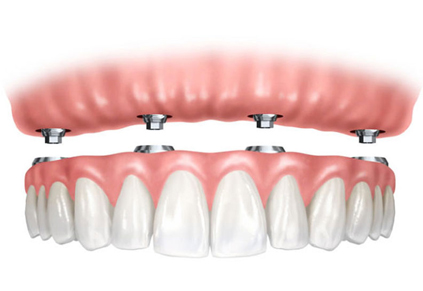
Tooth loss not only affects your overall health, but can negatively affect your self-esteem and appearance. Neighbouring teeth often attempt to fill in the spaces of missing teeth, complicating the issue of having too much space between teeth — this can affect both your bite and smile. After a tooth has been extracted, the bone material can erode, causing additional structural and cosmetic deterioration. Implant-supported dentures use a titanium root device that mimics the feel and function of a natural tooth’s root. As such, implant-supported dentures do not have the wiggle and “clacking” effect of typical full dentures. The titanium root of implant-supported dentures eventually grafts to your jawbone and actually promotes new bone growth. Therefore, implant-supported dentures also address the issue of bone loss that is commonly associated with long-term denture use. Replacing your teeth with implant-supported dentures can greatly increase your comfort, smile, and confidence. Recently, a new advance in implants has allowed the denture to be supported using the “all on four” technique, where the denture can be placed at the point of each arch support. This allows the implants and temporary crowns to be placed on the same day as the extraction.
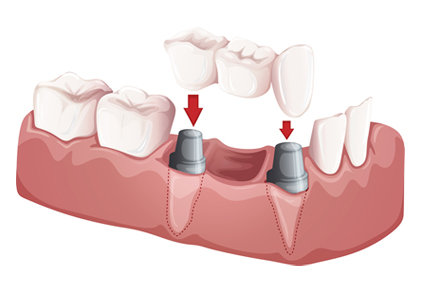
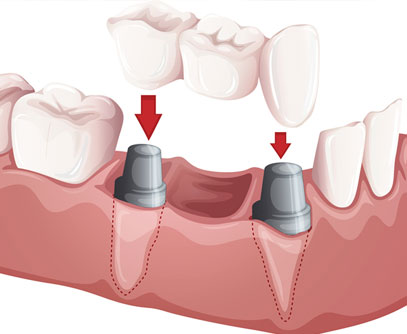
Implant-supported crowns and bridges are available at Woodstock Dental Centre. They offer better support, stability and security for the crown or bridge, they preserve bone structure and they can go indistinguishable from the rest of your teeth. These options can be discussed with your Woodstock dentist to find out what’s the best fit for your case.
Usually it's because a tooth is suffering from deep decay, or maybe you've had a series of dental procedures, a crack has developed or some trauma has occurred which has caused your tooth's inner pulp to become badly infected or inflamed.
Normally a root canal will take an hour or two for a single tooth, which might need one or two visits depending on just how complicated things are.
Essentially a dentist who has chosen to specialise in the very tricky business of working inside the tooth and doing root canal treatments and other procedures.
Most people are pretty much back to normal the day after, you might feel a bit of aching for a few days, but that can usually be sorted with a bit of over the counter pain relief.
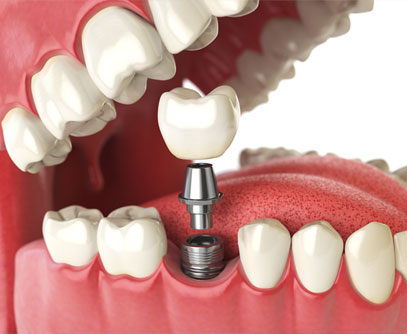
Yes, often you will. The thing is after a root canal, your tooth is basically brittle, and a crown is usually necessary to keep it from cracking apart and to make sure it can still do its job.
With a bit of proper care and the right restoration (like a crown) a tooth that's had a root canal can easily last all your life.
Schedule your initial consultation today and start your journey towards a pain-free, healthier smile. Contact us now!
If your current prosthesis is often slipping or falling out, or if it’s uncomfortable and causing you pain, you may want to consider all-on-4 implants. These implants can securely hold the denture in place, preventing it from slipping and providing a more natural-looking smile.
The first step is discussing your sedative options so that we can provide you with the comfortable experience you expect. We then administer this sedation and begin the surgery. Small incisions are made through the gums and the titanium implant posts are inserted deep into the bone. The sutures may be sutured to close the area and help promote proper healing. Over about three to six months, your implants will naturally begin to fuse with the surrounding bone and become secure, stable, and virtually permanent. You’ll then come in and have a specially made denture for you after taking impressions. We’ll show you how to remove and place the dentures as needed throughout the day.
If you’re interested in all-on-4 dental implants, call us today and we will help to get you in for an appointment.
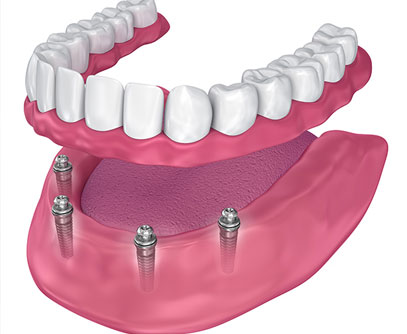
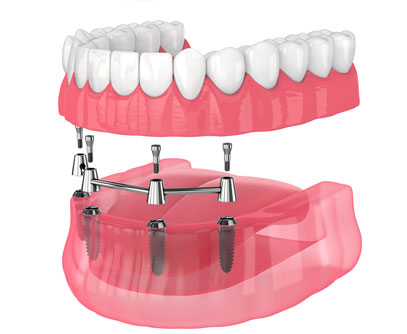
In a traditional full-mouth restoration, you might need 6 to 10 implants per arch. The All-on-4 technique uses only four. Two implants are placed vertically in the front, and two are tilted at a 45-degree angle in the back. This tilt allows the dentist to anchor the implants in areas with higher bone density, often eliminating the need for expensive and time-consuming bone grafts.
Most patients are surprised at how little pain they feel. The surgery is performed under local anesthesia or IV sedation, so you won’t feel anything during the process. Afterward, you may experience some swelling, bruising, or a "dull ache" for 3–5 days, which is typically managed with over-the-counter or mild prescribed pain relief.
Yes. One of the biggest draws is immediate functionality. On the day of your surgery, the dentist places the four implants and attaches a temporary set of teeth. You leave the office with a functional, aesthetic smile while your jawbone heals and fuses with the implants (a process called osseointegration).
The titanium implant posts are designed to be a permanent, lifelong solution. However, the prosthetic bridge (the visible "teeth") undergoes daily wear and tear. While the implants can last a lifetime with good care, the bridge typically needs to be replaced or refurbished every 10 to 15 years.
All-on-4 has a clinical success rate of approximately 98%. Failures are rare but are most often linked to smoking, uncontrolled diabetes, or poor oral hygiene, which can lead to infections or prevent the bone from bonding to the metal.
Yes, often you will. The thing is after a root canal, your tooth is basically brittle, and a crown is usually necessary to keep it from cracking apart and to make sure it can still do its job.
The first 72 hours: Focus on rest. Keep your head elevated to reduce swelling.
The first 2 weeks: Stick to a very soft diet (mashed potatoes, smoothies, yogurt).
3 to 6 months: This is the critical "healing phase" where the implants fuse to your bone. You must continue eating soft foods to avoid putting too much pressure on the implants.
You are likely a candidate if you:
Have lost most or all of your teeth.
Currently wear uncomfortable dentures.
Have lost bone density (the angled implants often bypass this issue).
Are in generally good health for minor surgery.



741 Dundas Street, Woodstock, ON, N4S 1E8
519.537.7135

Monday: 9:00am to 7:00pm
Tuesday: 9:00am to 7:00pm
Wednesday: 9:00am to 5:00pm
Thursday: 9:00am to 6:00pm
Friday: 9:00am to 4:00pm
Saturday: Closed
Sunday: Closed


Trustindex verifies that the original source of the review is Google. Great service, no complaints. techs and docs were patient and friendlyPosted onTrustindex verifies that the original source of the review is Google. Dr Sam is great !Posted onTrustindex verifies that the original source of the review is Google. Since being young, I have had many bad experiences with dentists. Then I found Dr. Michael's at Woodstock Dental. Such an amazing dentist and does absolutely great work and very gentle!!!! The staff there is also amazing, especially when you walk in the door, greeted by such happy friendly faces, and some who like to tease, they know who they are!!! Lol Always the best experiences here, will never go anywhere else!Posted onTrustindex verifies that the original source of the review is Google. They're all super friendly and the office is nice. Dr Zanata is doing an amazing job with my Invisalign! Highly recommend them.Posted onTrustindex verifies that the original source of the review is Google. Both the dentist and hygienist were lovely, made me comfortable, informed me through the procedure, and even gave me a chuckle. Thank you.Posted onTrustindex verifies that the original source of the review is Google. I just left my first intake appointment with this team since moving to Woodstock and WOW! they are great. More thorough than any dental clinic I've ever been to. Very gentle, very respectful, very friendly! I look forward to my future appointments and creating a plan to magnify my dental health as much as possible. I'm so pleased!Posted onTrustindex verifies that the original source of the review is Google. Every experience that I've had with Woodstock Dental Centre, is beyond professional always friendly staff. My first sleep dentistry experience, today, absolutely incredible.Load moreVerified by TrustindexTrustindex verified badge is the Universal Symbol of Trust. Only the greatest companies can get the verified badge who has a review score above 4.5, based on customer reviews over the past 12 months. Read more